
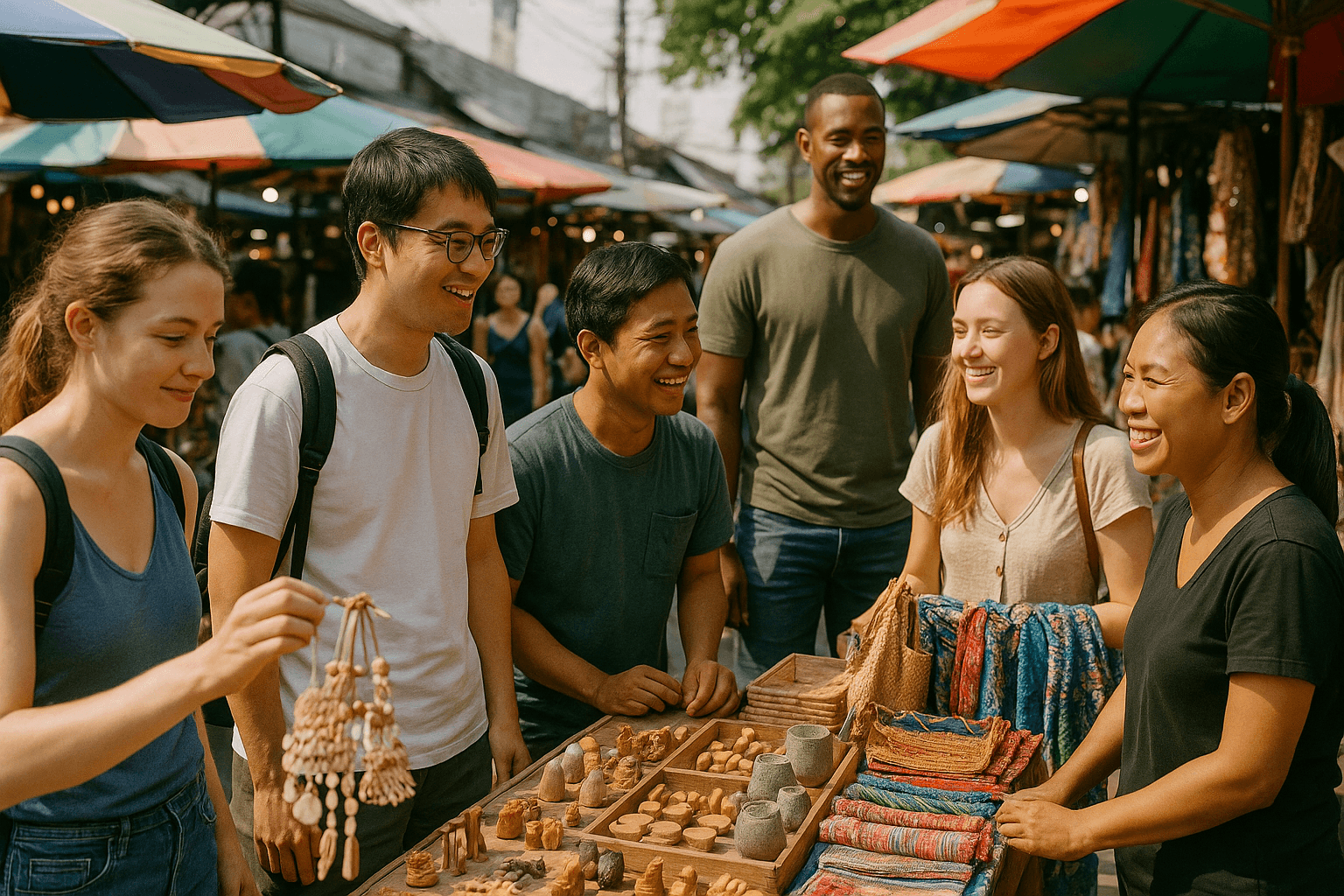
Across generations, travelers have wandered the world, and in their wake, have left stories, songs, and sometimes scars. Nomads for Impact wants to return to the older tradition of reciprocity by honouring places and people while we explore.
Our mission is to connect digital nomads and host communities. To create shared value by empowering remote workers, supporting sustainable local livelihoods, and preserving authentic cultures.
Our vision is for travellers and locals to grow strong side by side; nomads sharing skills that create steady work and healthy communities, while locals teach their stories, arts, and ways of life.
"Only when we with care can we truly give back wherever we roam"
Digital nomadism is booming. Researchers estimate there are more than 60 million nomads worldwide, and their economic footprint is huge.
"This growth brings opportunities and risks"
Money flows into small economies.
Nomads inject money into local businesses, cafés, and markets, which helps diversify economies and create jobs.
Coworking and co‑living spaces spring up, giving local entrepreneurs new opportunities. Infrastructure often improves, including better internet connections, transport, and public services.
Knowledge and cultural exchange.
Nomads carry ideas and skills across borders. They share web design, marketing, or language lessons with schools and small businesses, and their presence sparks a vibrant exchange of ideas, languages, and cultural practices. This can lead to innovative local projects and collaboration.
Encouraging entrepreneurship.
The demand for high‑speed internet cafés, coworking hubs, and tech services encourages locals to start businesses. Nomads also host workshops and events that transfer digital skills and open doors to remote work.
Promoting overlooked regions.
When nomads seek out rural or lesser‑known destinations, they bring visibility and income to places beyond the usual tourist trail.
Gentrification and rising costs.
An influx of wealthy remote workers can drive up prices for rent and services, squeezing locals out of their own neighbourhoods. In European cities like Lisbon or Barcelona, locals have been priced out while nomads enjoy “geo‑arbitrage”.
Cultural dilution and social divide.
Without effort, nomads can form expat bubbles that barely interact with residents. This superficial engagement erodes the very cultures visitors came to experience.Locals may feel alienated when knowledge sharing doesn’t happen.
Strain on infrastructure and environment.
Sudden demand for internet, housing, and utilities stresses local systems. Crowded streets and parks can disturb wildlife and produce more waste.
" Recognising both sides allows us to travel consciously.
As the UNSW study on Chiang Mai shows, nomads should respect local customs and cultural norms to enhance their experience and reduce harm.
Knowledge transfer and community collaboration can balance challenges and open opportunities. "
The good news is that small, thoughtful actions make a big difference. Here are some practical ways to give back:
Spend locally and ethically
Choose local over global.
Eat at family‑run restaurants, shop at farmers’ markets, and stay in locally owned guesthouses. Your spending circulates directly in the community.
Fair pay.
Avoid negotiating down prices that are already fair to locals. Pay fair wages to service providers and artisans for example.
Promote neighbourhood businesses.
Share reviews of local cafés, boutiques, and cultural tours in your networks. This visibility can bring them new customers.
Share your skills
Volunteer your knowledge.
Before arriving, ask yourself, “What can I teach? How can I contribute?” Whether you’re a programmer, graphic designer, marketer, or language teacher, offer free workshops at schools, NGOs, or small businesses. Teach kids to code, show a shop owner how to use social media, or help an artisan set up an online shop. Even short sessions can create lasting value.
Mentor entrepreneurs.
Help local start‑ups improve their websites, financial planning, or customer outreach. Consider joining a local incubator or co‑working hub to connect with entrepreneurs seeking guidance.
Support through giving
Donate with purpose.
Instead of giving randomly, choose projects where you see exactly how your money helps. Consider funding training, equipment, or community projects like tree‑planting or library upgrades. Follow up to learn the impact of your donation.
Crowdfund for micro‑projects.
Team up with other nomads to fund small, meaningful initiatives – from school supplies to community gardens.
Transparent giving builds trust.
Learn and respect local culture
Prepare before you go.
Read about local customs, greetings, taboos, and history. Learning even a few words in the local language opens doors and shows respect.
Observe cultural norms.
Dress modestly, follow etiquette in temples or homes, and ask permission before taking photos. Remember you’re a guest; humility goes far.
Celebrate heritage.
Attend cultural events, cooking classes, and craft workshops.
Document traditions with permission and share them with appreciation rather than appropriation.
Join community life
Be present.
Join a local sports team, book club, or neighbourhood clean‑up. Everyday activities build bridges more than tourist attractions.
Attend meetups and workshops.
Look for language exchanges, cultural festivals, or environmental projects. Contribute your time and enthusiasm.
Start something.
If there isn’t a gathering, organise one – a beach clean‑up, tree planting, or skills exchange session.
Collaboration cultivates friendship and trust.
Travel light and green
Minimise your footprint.
Pack reusable bags, bottles, and cutlery; avoid single‑use plastics. Use public transport, walk, or cycle when possible.
Support environmental projects.
Join local conservation efforts – plant native trees, help in community gardens, or participate in litter clean‑ups. Your actions protect the places you love.
How to be involved – building meaningful relationships.
Being involved goes beyond a single purchase or donation. It’s about relationship and reciprocity:
Spend locally and ethically
Take part in ongoing programmes.
Nomads for Impact’s impact pillars are designed to guide involvement: Empower Through Skills, Support Through Giving, and Inspire Conscious Travel.
Volunteer regularly.
Whether teaching weekly coding classes or helping at a community centre, consistency builds trust and deeper learning.
Join online community platforms.
Local nomad groups on social media often share volunteering opportunities, networking events, and cultural tips.
Collaborate with NGOs and social enterprises.
Partner with organisations working on education, environment, or social justice. Your skills and networks can amplify their impact.
Be a storyteller.
Use your blog or social media to highlight local initiatives, artisans, and traditions. Focus on the people and their stories, not just on yourself.
Share your skills
Volunteer your knowledge.
Before arriving, ask yourself, “What can I teach? How can I contribute?” Whether you’re a programmer, graphic designer, marketer, or language teacher, offer free workshops at schools, NGOs, or small businesses. Teach kids to code, show a shop owner how to use social media, or help an artisan set up an online shop. Even short sessions can create lasting value.
Mentor entrepreneurs.
Help local start‑ups improve their websites, financial planning, or customer outreach. Consider joining a local incubator or co‑working hub to connect with entrepreneurs seeking guidance.
Support through giving
Donate with purpose.
Instead of giving randomly, choose projects where you see exactly how your money helps. Consider funding training, equipment, or community projects like tree‑planting or library upgrades. Follow up to learn the impact of your donation.
Crowdfund for micro‑projects.
Team up with other nomads to fund small, meaningful initiatives – from school supplies to community gardens.
Transparent giving builds trust.
Learn and respect local culture
Prepare before you go.
Read about local customs, greetings, taboos, and history. Learning even a few words in the local language opens doors and shows respect.
Observe cultural norms.
Dress modestly, follow etiquette in temples or homes, and ask permission before taking photos. Remember you’re a guest; humility goes far.
Celebrate heritage.
Attend cultural events, cooking classes, and craft workshops.
Document traditions with permission and share them with appreciation rather than appropriation.
Join community life
Be present.
Join a local sports team, book club, or neighbourhood clean‑up. Everyday activities build bridges more than tourist attractions.
Attend meetups and workshops.
Look for language exchanges, cultural festivals, or environmental projects. Contribute your time and enthusiasm.
Start something.
If there isn’t a gathering, organise one – a beach clean‑up, tree planting, or skills exchange session.
Collaboration cultivates friendship and trust.
Travel light and green
Minimise your footprint.
Pack reusable bags, bottles, and cutlery; avoid single‑use plastics. Use public transport, walk, or cycle when possible.
Support environmental projects.
Join local conservation efforts – plant native trees, help in community gardens, or participate in litter clean‑ups. Your actions protect the places you love.
What happens when we don’t understand the negative impacts
We’re not here to paint a rosy picture; there are real consequences if we ignore our footprint:
Gentrification displaces locals.
Rapid rent increases and rising prices hurt people on fixed incomes.
Some European cities have already seen residents priced out.
Cultural erosion and resentment.
Superficial engagement leaves locals feeling invisible. When nomads don’t learn the language or participate in traditions, an expat bubble forms, and resentment grows.
Environmental stress.
Crowded parks and beaches become littered; public transport and utilities struggle.
Without care, the natural beauty that attracted us degrades.
Missed opportunities.
When nomads don’t share skills or mentor locals, knowledge stays locked in coworking spaces. Locals miss out on digital skills that could lift them into better jobs.
Missed opportunities.
When nomads don’t share skills or mentor locals, knowledge stays locked in coworking spaces. Locals miss out on digital skills that could lift them into better jobs.
" To prevent these outcomes, we must question our motives and habits. Ask yourself whether you’re enriching or extracting. Do you buy from chains or craft markets? Do you pay fair rent or exploit cheap housing? Do you learn or lecture? Honesty leads to better choices. "
Topic ideas for this page and beyond
To keep the conversation lively, consider weaving in these recurring themes:
Spotlight Stories:
Interviews with local entrepreneurs, artisans, or community leaders who have benefited from nomad engagement.
Skill‑Sharing Tutorials:
Short guides where nomads explain how they taught a class or mentored a local business.
Conscious Travel Tips:
Practical advice on reducing waste, choosing ethical experiences, respecting cultural norms, and travelling sustainably.
Local Language Corners:
Mini‑lessons teaching key phrases in the host language; emphasise greetings and polite expressions.
Case Studies:
Features on cities like Chiang Mai, where careful planning has balanced benefits and drawbacks. Show what works and what doesn’t.
Policy and Advocacy Updates:
Explain how policies such as digital nomad visas or housing regulations affect locals, and encourage readers to support equitable solutions.
Environmental Action Calendar:
Announce upcoming clean‑ups, tree‑planting days, and workshops on waste reduction.
Cultural Etiquette Guides:
Deep dives into traditions, festivals, and etiquette of host communities, co‑created with local voices.
Rural Escape Guides:
Highlight lesser‑visited towns and villages that welcome nomads responsibly.
Conclusion – travelling with purpose
Travel has always been a powerful teacher.
By honouring the past, we remember that hospitality is sacred and that visitors are guests.
By imagining a fairer future, we see how global mobility can uplift communities rather than marginalise them.
At Nomads for Impact, we believe that when nomads thrive with locals – not at their expense – everybody wins.
Let’s roam wisely, give generously, and build bridges that outlast our journeys.